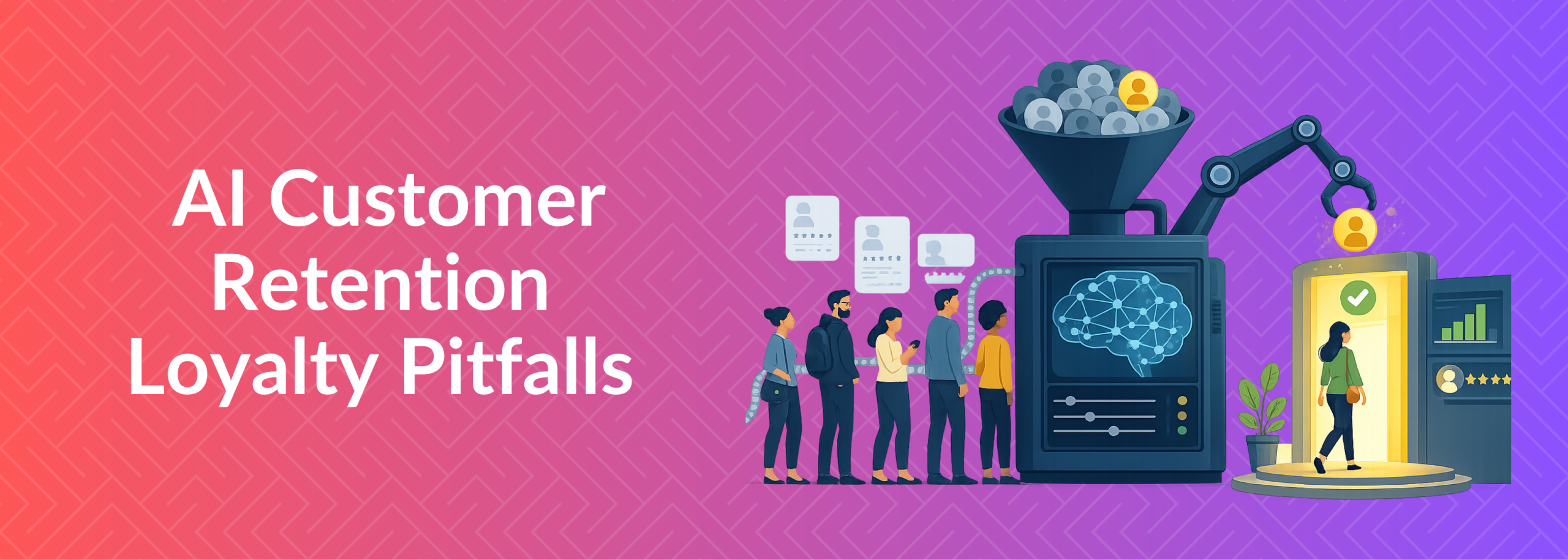
When the Algorithm Decides Who Deserves to be Your Customer

I read a piece recently that’s hard to shake.
It described a CX dashboard where an AI system had flagged thousands of customers as “Retention Exceptions.” Not because they complained. Not because they caused problems. Because the math said they weren’t worth keeping. Ninety-two percent confidence. Negative lifetime value remaining. Recommendation: do not intervene.
The number that got me was $48.2 million. That was the projected annual benefit of quietly letting those customers go.
The logic was flawless. The ROI was real. And something about it felt completely wrong.
The tools behind that dashboard, such as predictive churn modeling, lifetime value forecasting, and AI-driven retention prioritization, are genuinely powerful. Used well, they help you focus resources, spot at-risk customers earlier, and intervene before problems compound. But there’s a version of this that’s gone somewhere CX was never supposed to go, and it’s worth being direct about why.
When Predictive Churn Modeling Becomes a Business Philosophy
Customer experience was built on a pretty simple idea: treat people well, earn their loyalty, and the business outcomes follow. Loyalty isn’t just a feeling; it’s a behavior. Retained customers spend more, refer more, and cost less to serve over time. The relationship wasn’t soft thinking. It was commercial logic with a longer time horizon.
What AI-driven retention tools do is compress that time horizon into a probability score. And when you’re making decisions at scale, thousands of customers, milliseconds per decision, a probability score starts to feel like a fact.
That’s where it gets dangerous.
The story in that piece included a customer who had recently lost their job. Order volume down. Returns up. Support contacts are rising. The system read all of it as declining value. The human looking at the same data read something different: a customer going through a hard period who might come back when things improve. The machine saw risk. The person saw context.
Many well-intentioned CX strategies are going wrong right now because of the gap between what the model calculates and what the situation actually is.
The Customer Lifetime Value Measurement Problem Nobody Wants to Name
I’ve written before about how contact center dashboards can look fine right up until the moment they don’t. The same dynamic is happening here, just at a different layer.
When you start optimizing for predicted lifetime value, you’re not measuring the customers you helped through a difficult period and retained for another decade. You’re not capturing the word-of-mouth from someone who stayed because you treated them like a person, even though it would have been cheaper not to. You’re not counting the damage to your brand when the customers you let go quietly tell people about it.
None of that shows up in your model. The $48.2 million gain looks clean. The costs are invisible.
Traditional CX thinking was never blind to profitability. Good CX leaders have always understood that you can’t serve everyone equally in every moment. You triage, prioritize, and make calls. But the philosophical starting point was: we’re here to help customers. The question was always how, not whether.
What AI-driven selective churn does is flip that. The starting question becomes: Is this customer worth helping? And once that becomes the default framing, you’ve changed something fundamental about what your CX function actually is.
Read : Keep Track of Everything – Should This Be Your Contact Center Mantra?
Balancing AI in Customer Experience with Human Judgment
This isn’t an argument against using AI in retention. It’s an argument for being deliberate about where it makes decisions and where it informs them.
There’s a practical distinction worth drawing. AI is genuinely excellent at flagging. It can identify at-risk customers faster and more accurately than any human team working through a spreadsheet. It can surface patterns that would take months to see manually. Used that way, it makes your CX team smarter and more proactive. That’s a good outcome.
What it’s not equipped to do is make the call. Not on its own. Because the call requires judgment about things the model can’t see.
Why is this customer’s behavior changing?
What’s the relationship history that doesn’t live in transaction data?
Is this a temporary dip or a permanent shift?
What does it mean for our brand if we stop trying?
The companies getting this right are using AI to expand what their teams can see, not to replace what their teams can decide.
The model tells the retention specialist: “Here are 500 customers who are likely to leave in the next 90 days.” The specialist, using the model’s data and human judgment, decides what to do about each of them. That’s not a slower process. It’s a better one.
Beyond the Math: The Long Game of Earning Customer Loyalty
The piece I read ended with a question that cuts to the heart of the issue: “If AI can tell us exactly which customers are worth keeping, how long before we stop trying to earn loyalty at all?”
That’s the real risk. Not that the tools are wrong, but that over time, they reshape how we think. If every retention decision is filtered through a profitability model, you stop building the muscles required to earn loyalty in the first place. You stop asking, “What does this customer actually need right now?” You start asking, “What does the model recommend?”
CX has always been partly about the short game and partly about something longer. The brand you’re building. The reputation that compounds. The customers stay not because switching is hard, but because they actually trust you.
AI can help you play the short game faster. But it can’t play the long game for you. That still requires humans to make judgment calls that don’t always optimize cleanly and to be willing to invest in a customer whose value is currently negative.
Sometimes the right retention action is: none of the above. It’s just treating someone like they matter.
That’s not bad CX. That’s the whole point of it.