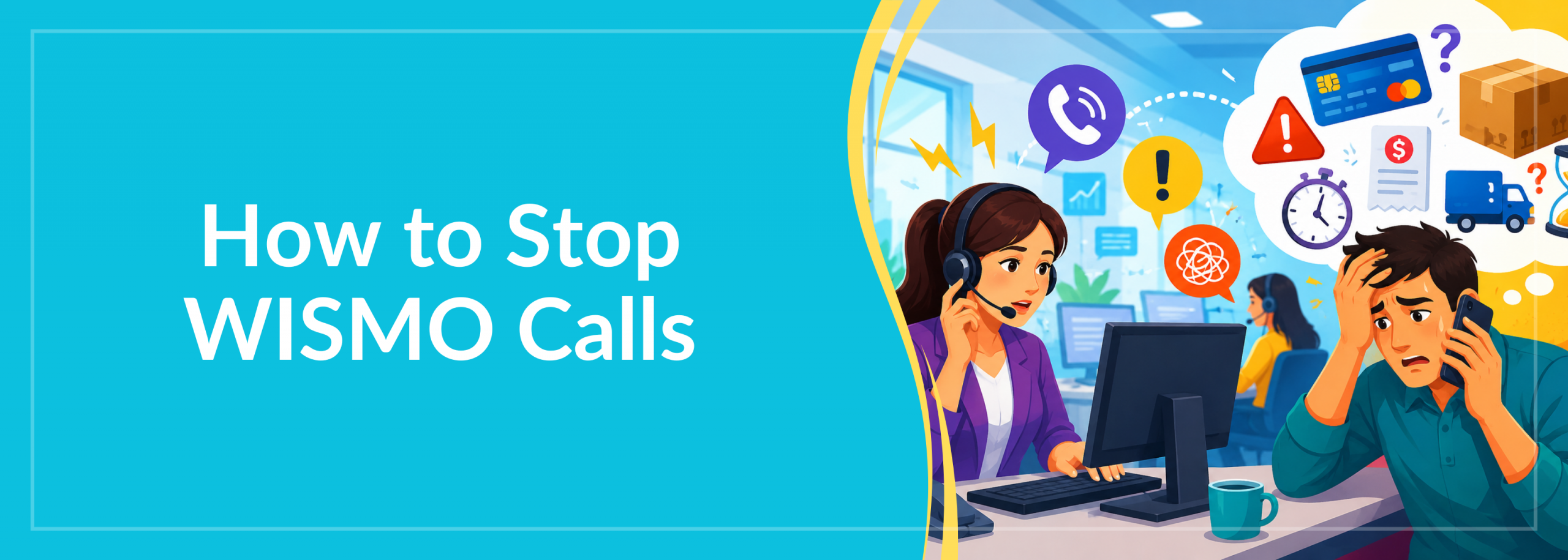
The Uncertainty Window: Why Payment and Order Anxiety Is Flooding Your Call Center

I was reading a thread in r/customerexperience the other day about companies spinning up “Head of Customer AI” roles, and the discussion drifted into something that has stuck with me since. The realization, paraphrased: a customer will happily take a 30-second process they can see over a 5-second process they can’t.
Read that twice because it runs counter to almost everything we’ve been trained to optimize for. We worship speed in this business. Faster checkout, faster confirmation, faster everything. But speed without visibility doesn’t create confidence; it creates a void. And a customer staring into a void does not wait patiently. They pick up the phone.
Think about Domino’s. The Pizza Tracker does not make your pizza arrive one minute faster. If anything, it adds a screen to stare at. But it tells you precisely where your order is, from “Prep” to “Bake” to “Out for Delivery,” and that visibility is the entire point. Nobody calls the store to ask, “Is my pizza in the oven yet?” because they can already see that it is.
A slower, narrated process beat a faster, silent one. Domino’s didn’t speed up the pizza. They removed the uncertainty wrapped around it.
Defining the “Uncertainty Window”: Where Customer Anxiety Is Born
Let me give this thing a name, because once you can name it, you can hunt it.
I call it the Uncertainty Window: the gap between the moment a customer takes an action and the moment your system visibly confirms what happened.
Sometimes that window is a few seconds. Sometimes it’s hours. Either way, it’s where the panic is born.
Picture the precise moments.
The customer taps “Pay ₹4,999,” the screen spins, then goes blank: the app crashes or reloads to an empty cart, and, as far as they can tell, the money just left their account with nothing to show for it.
(Or)
someone places an order at 11 pm, no confirmation email lands within five minutes, and by 11:20 they’re refreshing their inbox and Googling whether your site is down.
(Or)
a UPI payment sits on “pending” because the bank has debited the amount, but the merchant hasn’t acknowledged it yet, which in India happens thousands of times an hour and routes straight to support.
(Or)
a refund promised in “five to seven business days” hasn’t appeared on day six. Or an airline charged the card, but the e-ticket never arrived, leaving the customer unsure whether they own a seat or just a debit.
Every one of these has the same shape: action taken, confirmation missing, anxiety climbing.
The customer isn’t angry yet. They’re anxious. And anxiety, left alone in silence, hardens into an inbound contact.
Jeff Toister has a nice phrase for the things customers can’t see but still react to: “Invisible ropes.” The Uncertainty Window is an invisible rope made entirely of silence.
How Can Contact Centers Reduce WISMO (Where Is My Order) Calls?
Here’s the part that tends to irritate operations leaders. We pour enormous energy into shaving Average Handle Time on these calls. We script them, we build IVR menus for “press 2 for order status,” we coach agents to close a “where’s my order” in under 90 seconds, and we celebrate when the AHT line ticks down.
Why AHT Is the Wrong Scoreboard for Order Anxiety
But step back for a second. If a customer is calling to ask whether their payment went through, the call itself is a failure. You did not need a faster way to answer that question. You needed the customer never to have to ask for it.
There’s a useful concept from John Seddon called failure demand: demand created by a failure to do something, or to do it right, for the customer. Chasing the status of something is the textbook case.
Deleting “Failure Demand” at the Source
Most contact centers I’ve worked with are startled the first time they tag and count it properly, because it routinely runs 30 to 40 percent of inbound volume, and climbs higher in e-commerce and fintech during peak periods.
I once watched a retailer discover that a single missing notification, no “your order is confirmed” message when payment cleared through a particular gateway, was responsible for nearly a fifth of their festive-season call volume.
They’d spent the quarter trying to staff up for the surge. The surge was self-inflicted. That is not a demand you should be getting more efficient at handling. It’s a demand you should be deleting.
So AHT is the wrong scoreboard for this whole category. Optimizing handle time on a status call is like getting really good at mopping while the tap is still running. The number I’d nail to the wall instead is contacts per thousand transactions.
How many calls, chats, and emails does every 1,000 orders or payments throw off? Push status updates proactively, watch that number fall, and you’ve won something real. AHT staying flat while volume drops is the actual victory.
The Danger of “Bad Deflection”
One warning on the word ” customer deflection,” because it gets abused. There is good deflection, and there is bad deflection.Good deflection is answering the question before it’s asked. Bad deflection is when you buried the phone number, trapped the customer in a chatbot loop, and they gave up. Both make your call volume drop. Only one of them makes the customer happy.
If your deflection strategy is really just a wall, you haven’t removed the anxiety; you’ve imprisoned it, and it’ll come back as a one-star review or a chargeback.
What Is Proactive Customer Service in a BPO Context?
The fix isn’t exotic, and most of the parts are already sitting in your stack. It’s proactive, automated, omnichannel status messaging that pushes updates to customers before they ever think to look for them.
How Do Automated Notifications Reduce Inbound Call Volume?
The trigger is a system event, not a human being.
Payment authorized? Fire a confirmation.
Order received? Send it.
Order delayed? Especially send that one, because a heads-up about a delay you volunteer is worth ten apologies you offer after the customer chases you down.
Out for delivery, refund initiated, refund credited; every state change is a chance to close the Uncertainty Window before it opens.
Choosing the Right Omnichannel Solution
The channel should meet the customer where they already live. Across India and much of the world that increasingly means WhatsApp, where order updates, payment receipts, and live tracking land in the same app people use to text their family, and the open rates make email look like a noticeboard in an empty corridor.
SMS is the dependable fallback that works on every handset with no app required, which is exactly why it’s still the right channel for the bank debit alert your father actually reads.
Automated voice and callbacks have a role too: a proactive “your payment didn’t go through, here’s how to retry” call can rescue a high-value order that would otherwise just evaporate.
The point is omnichannel solution for call center; the routing logic picks the right moment and the right channel, and the message goes out on its own.
Learning From CX Leaders (Uber, Amazon, Swiggy)
We already treat this as normal in the experiences we admire.
Uber shows you the car crawling across the map toward your pin, so you don’t call to ask where the driver is.
Amazon tells you “Arriving today by 9pm” and walks you through each step to your door.
Swiggy and Zomato show the rider’s live location and a ticking ETA.
Razorpay and Stripe fire instant payment webhooks that trigger a receipt the moment the money clears.
None of these made the underlying process faster. They made it visible.
They moved confirmation from “eventually, if you go digging for it” to “right now, pushed to your phone.” That shift is the entire game.
Where to Start Tomorrow
Pull your last 200 contacts and mark the exact instant each customer panicked. You’ll almost always find five or six repeatable triggers generating the bulk of the volume, and each one is simply a proactive message you aren’t sending yet. Close those windows, and the calls don’t get shorter; they stop arriving.
That’s what a modern omnichannel contact center is built to do: wire your system events to the right channel at the right moment, automatically, so the status update reaches the customer before they ever reach for the phone. If you’re ready to stop handling payment and order anxiety and start preventing it, explore omnichannel contact center and call center automation.
Frequently Asked Questions
Stop waiting for the customer to ask. Most WISMO calls trace back to one gap: “There’s no visible confirmation of where the order is.” So, the fix is proactive status updates pushed at every state change: confirmed, packed, shipped, out for delivery, delayed. When the answer arrives before the question, the call never gets made. Tag your last few hundred WISMO contacts, and you’ll usually find five or six repeatable triggers you can automate away.
Proactive customer service means reaching out to the customer before they contact you, triggered by a system event rather than a human. Instead of staffing agents to answer “did my payment go through?”, the BPO fires an automated confirmation the moment it does. It shifts the operation from reacting to inbound demand to preventing it, thereby lowering volume and lifting satisfaction.
They close the Uncertainty Window, the anxious gap between a customer’s action and your system’s confirmation. A timely payment received, order shipped, or refund credited message answers the question the customer was about to call about, so the contact never happens. It’s the cleanest way to remove failure demand, the slice of volume (often 30–40%) created purely by customers chasing status.
Use both, routed by context. WhatsApp suits rich, high-engagement updates, such as live tracking, receipts, and two-way replies, and tends to get far higher open rates because customers already live in the app. SMS is the universal fallback that needs no app, no internet, and no opt-in friction, which makes it safer for critical alerts like a bank debit or a failed payment. An omnichannel system automatically selects the right channel for each message.
Not for status calls. If someone is calling to ask whether their payment went through, the call itself is the failure, and shaving 20 seconds off it misses the point, because they shouldn’t have had to call at all. Measure contacts per 1,000 transactions instead, and treat a decline in call volume (not handle time) as the win. AHT still matters for complex, genuine queries; it’s just the wrong scoreboard for demand you should be eliminating.