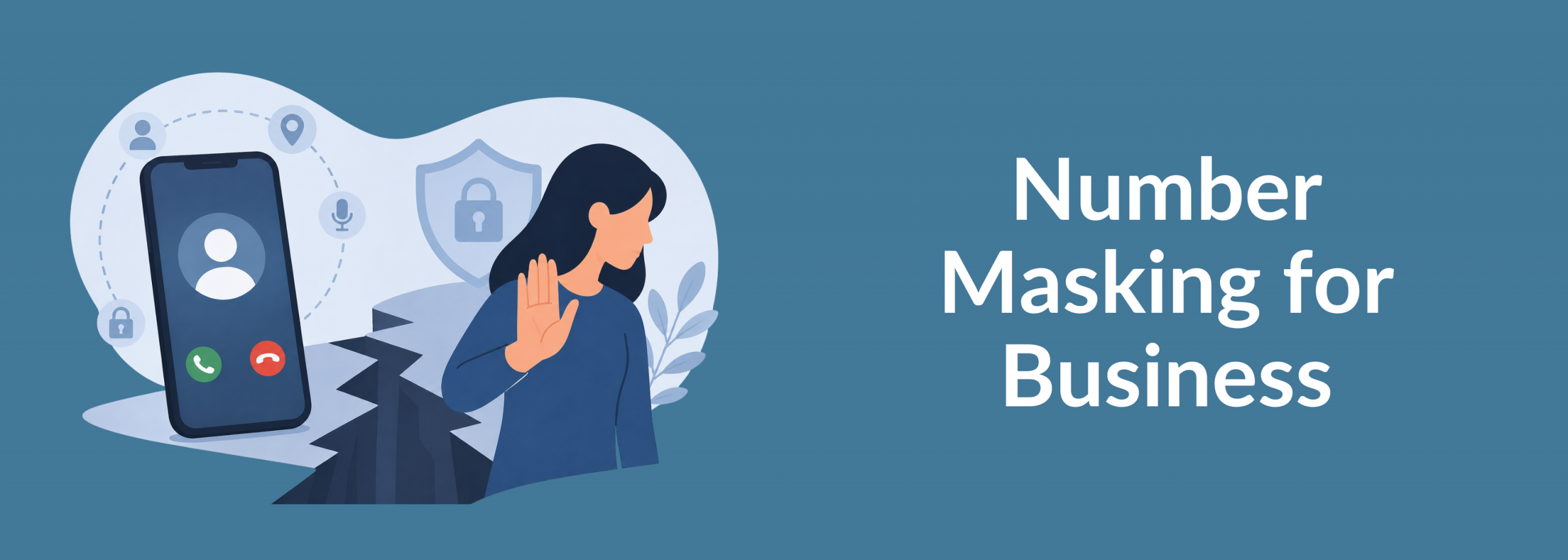
The Privacy Gap: Why Customers Stop Answering Business Calls

I still remember the week I bought a new phone. Within 48 hours, I was getting calls from loan apps, real estate brokers, insurance agents, and at least two people who claimed to be from “the bank’s verification department.” I hadn’t called any of them. I hadn’t signed up for anything. My number had simply found its way into the wrong hands, or rather, too many hands.
That experience is not unique to me. Ask anyone in India, and they’ll have a version of the same story. And that shared exhaustion is precisely why customers across the country have stopped answering calls from numbers they don’t recognize.
This is the privacy gap, and it is costing Indian businesses more than they realize.
Why Do Customers Stop Answering Business Calls?
Customers stop answering business calls due to a severe privacy gap caused by rampant data sharing, telemarketing fatigue, and unauthorized spam. To protect their data privacy, consumers now rely heavily on call-blocking apps and built-in spam filters, causing legitimate business calls to be ignored alongside fraudulent ones.
The Rise of Call-Blocking Apps in India
India is Truecaller’s largest market by a significant margin. With over 300 million active users in the country, the app has essentially become the informal gatekeeper of who gets heard and who gets ignored. If your business number gets flagged as spam even once, you’re done. The customer never picks up.
But Truecaller isn’t working alone. Built-in spam filters on Android phones, TRAI’s own DND (Do Not Disturb) registry, and the growing use of apps like Mr. Number have collectively built a wall around the Indian mobile user. And they built it for good reason.
India consistently ranks among the top countries globally for spam call volumes. The TRAI received over 10 lakh complaints under its DND framework in a single year. That’s not a telemarketing problem; that’s a systemic breakdown of how businesses have chosen to communicate with customers.
The tragedy is that legitimate businesses, such as your neighborhood pharmacy calling about a prescription refill, a Meesho seller confirming a return, a pathology lab sending a report reminder, are getting caught in the same net as the fraudsters.
The Trust Deficit: An Indian Problem With Indian Roots
To understand why customers don’t answer, you have to understand how we got here.
In India, the sharing of customer data has been, frankly, a free-for-all for far too long. You give your number at a chemist’s counter, and within days, you’re receiving calls from a health insurance aggregator. You use a food delivery app once, and suddenly, a cloud kitchen is calling you directly. You visit a car showroom for a test drive, and your number has been sold to three different financiers before you reach home.
We, as a market, normalized this. And customers noticed.
What followed was a rational response: stop answering. The Indian mobile user has become one of the most call-averse in the world, not because they don’t want to be reached, but because being reachable has become a liability. Trust, once broken at scale, is extraordinarily difficult to rebuild.
Why Transparency Matters More Than Ever In 2026
India is at an inflection point when it comes to digital privacy. The Digital Personal Data Protection (DPDP) Act, 2023, has begun to reshape what businesses can and cannot do with customer data. Consent is no longer a formality buried in terms and conditions; it is a legal requirement with real consequences.
Beyond the law, something more important is happening culturally. The Indian digital consumer, especially in Tier 1 and Tier 2 cities, is increasingly aware of their data rights. I see it in conversations, in social media threads, in the way people now read app permission requests before clicking “Allow.” The awareness has arrived, even if enforcement is still catching up.
For businesses, this means one thing: transparency is no longer optional. Customers want to know who is calling, why, and how their number was obtained. Businesses that can answer these questions clearly and demonstrate that they handle data with integrity will be the ones whose calls actually get answered.
The Regulatory Moment You Cannot Afford To Miss
The DPDP Act isn’t just a compliance checkbox. It is, if you choose to see it this way, an opportunity.
Businesses that align their communication practices with the spirit of the law, not just the letter, will earn something that no media spend can manufacture: credibility. And in a market like India, where word-of-mouth still carries enormous weight, credibility travels fast.
The TRAI’s regulations on Unsolicited Commercial Communications (UCC) are also being tightened. Penalties for violations are real. But more importantly, the reputational damage from being publicly called out as a spam caller in the age of social media can be swift and severe. Getting ahead of this isn’t just ethical; it’s smart business.
Number Masking for Business: Why It’s Tailor-Made for Indian E-Commerce and Healthcare
Here is where the solution becomes very practical and very Indian.
What Is Number Masking For Business?
Number masking(Call Masking) for business is a cloud telephony technology that routes phone calls through a temporary virtual number. This ensures that neither the customer nor the business agent sees the other party’s real personal phone number, effectively securing customer data privacy and preventing unauthorized data leaks.
Consider the e-commerce ecosystem. India’s quick commerce and last-mile delivery sector is enormous, driven by players such as Zomato, Swiggy Instamart, Blinkit, Meesho, and thousands of D2C brands. Every day, delivery executives call customers to confirm addresses, gate codes, or timing. Without number masking, the customer’s personal mobile number is exposed to the delivery agent, and the agent’s number is visible to the customer. Neither party asked for that exchange.
Number masking solves this cleanly. The call goes through a virtual number masking system. The delivery happens. The delivery happens. The interaction ends. No number is stored, shared, or sold. This is not a luxury feature for any platform handling millions of deliveries a month; it is a fundamental safety and trust mechanism.
In healthcare, the stakes are higher. India’s digital health push, driven by the Ayushman Bharat Digital Mission (ABDM), has brought millions of patients into contact with teleconsultation platforms, diagnostic labs, and hospital helplines. When a patient receives a call from their doctor’s clinic, they need to feel confident that the call is legitimate and that their health data is secure. Number masking ensures that the secure communication channel is protected, that patient numbers don’t leak to third-party vendors, and that the clinic’s credibility remains intact.
The same logic applies to edtech platforms that call parents, fintech apps that follow up on loan applications, and real estate portals that connect buyers with brokers. India’s entire digital services economy depends on phone-based trust, and number masking is the infrastructure that enables it.
Take Action Today
If your business relies on outbound calling, and most Indian businesses still do, it’s time to ask some hard questions.
- Are your customer numbers being shared with agents, vendors, or partners without masking?
- Are your call answer rates declining?
- Are you operating in healthcare, fintech, or e-commerce without a verified communication framework?
Explore call masking to understand how number masking works, what it costs, and how quickly it can change your customers’ experience of your brand.
There is a particular kind of business wisdom that has always existed in Indian markets: the trust a local kirana owner builds with his customers over years of honest dealings. No manipulation, no overselling, just consistency and respect.
Scaling that ethos into the digital age is the challenge of our time. And protecting customer privacy is how you do it.
Close the privacy gap. Make your calls worth answering. In a country of 1.4 billion potential customers, the businesses that earn the right to be heard will be the ones that last.
The phone is still the most human channel we have. Use it like it matters, because to your customer, it does.
Frequently Asked Questions
Yes, completely. Call masking operates within TRAI’s regulatory framework and aligns with the Digital Personal Data Protection (DPDP) Act, 2023. It actually helps businesses demonstrate compliance by preventing unauthorized storage or sharing of customer phone numbers, which is precisely what the DPDP Act requires.
Calls are routed through a temporary virtual number, so neither the customer nor the agent ever sees the other’s real number. Once the interaction ends, the virtual number expires, meaning no personal numbers are stored in call logs, shared with partners, or at risk of being leaked downstream.
From the customer’s end, it feels like any other call. Businesses that inform customers upfront, via SMS or app notification, that calls will come from a verified platform number actually see higher answer rates. In India’s spam-fatigued environment, a verified masked number is a trust signal, not a red flag.
The impact is most immediate in four areas: e-commerce and quick commerce (delivery agents reaching customers), healthcare and diagnostics (patient confidentiality), fintech and lending (sensitive verification calls), and edtech and home services (platform-mediated connections). If your business connects two parties for a time-limited transaction, number masking is relevant to you.
Much simpler than expected. Most solutions are available as API integrations that plug into your existing CRM or delivery platform within days. For businesses already using cloud telephony providers, adding number masking is often a configuration change rather than a full implementation project.