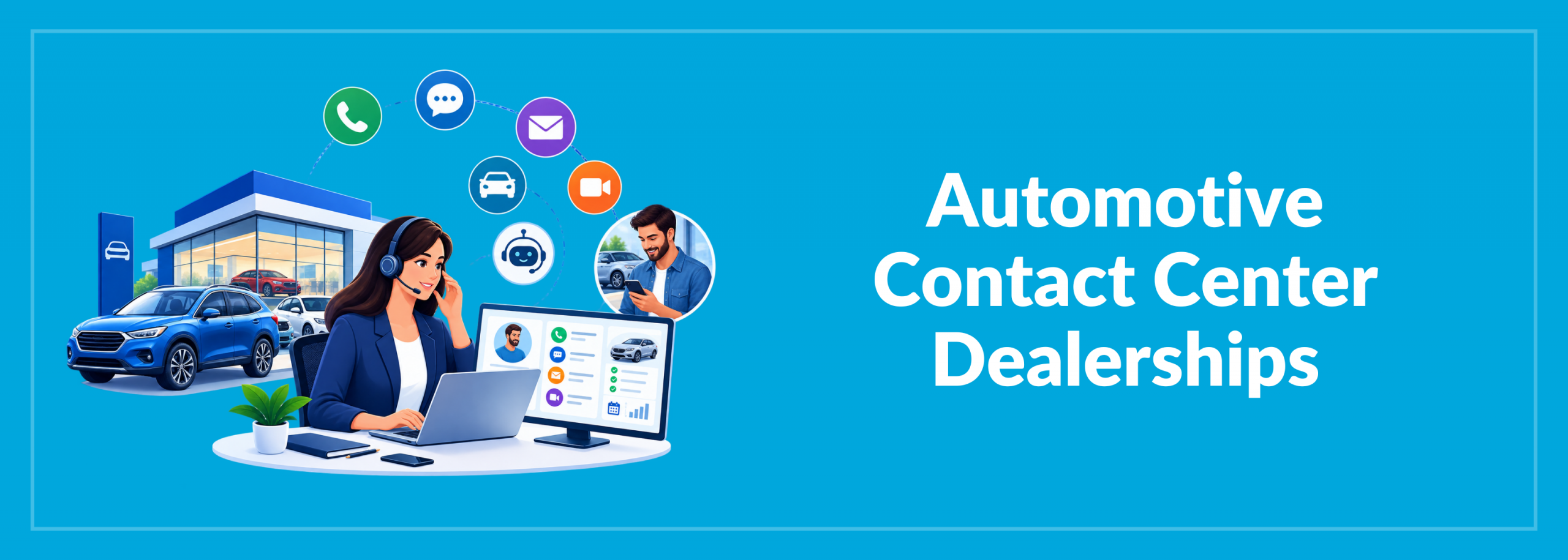
Why Every Automotive Dealership Needs a Smarter Contact Center

A few months ago, I tried to book a test drive on a dealership’s website at 11 am on a Sunday. I filled out the form, got the “someone will be in touch” message, and then there was no confirmation, follow-up call, or text. By the time someone actually called me back on Wednesday, I’d already test-driven a competitor’s car and put down a deposit. I wasn’t even annoyed at the dealership by that point. I’d just moved on, the way people do now.
That’s the thing I keep coming back to when I talk to dealership GMs and service managers: the buyer’s journey doesn’t start when someone walks through the showroom door anymore. It starts on a phone, at night, from a couch, probably while comparing three other dealerships in adjacent tabs.
By the time a customer shows up in person, they’ve usually already formed an opinion about whether this dealership is easy to deal with, and that opinion gets set long before a salesperson ever shakes their hand.
I’ve spent enough time inside dealership operations to see the pattern clearly: the showroom experience is often genuinely good. Sales staff are trained, service bays are efficient, and the people are likable. But the layer before that like the inquiries, the follow-ups, the appointment reminders, the “hey, your car’s ready” calls is frequently held together with spreadsheets, sticky notes, and whoever happens to be free to make a call that afternoon. And that gap is exactly where deals and loyalty quietly leak out.
Where Dealerships Actually Lose Deals
The most common failure point I see isn’t a bad salesperson or a broken car. It’s the handoff moments, like the seams between “customer showed interest” and “customer became a deal.”
Missed leads are the obvious one. A lead comes in from a website form, a marketplace listing, or a walk-in inquiry, and it sits in an inbox or a CRM field nobody’s actively watching. Industry data is fairly consistent: automotive leads that aren’t contacted within the first hour convert at a fraction of the rate of those that are, and by 24 hours, most of that opportunity is gone. Dealerships aren’t losing these deals because the product is wrong. They’re losing them because nobody called back in time.
Then there’s the test-drive follow-up problem, which is really a variation of the same issue. Someone drives the car, seems interested, leaves, and then the dealership’s follow-up depends entirely on whether that particular salesperson remembers to call, and when. I’ve watched genuinely hot leads go cold simply because the follow-up call happened four days later instead of four hours later.
And on the service side, it’s reminders. Service revenue is one of the most reliable, recurring revenue streams a dealership has, and yet the reminder process, like “your car’s due for service,” “your warranty’s about to lapse,” “there’s a recall on your model,” is often manual, inconsistent, and easy to deprioritize when the team gets busy with walk-in traffic. Customers don’t come back because they don’t need service; they don’t come back because nobody reminded them when it mattered.
None of these are people problems. They’re system problems, and they are fixable.
What a Modern Automotive Contact Center Stack Actually Needs
When I talk to dealerships about fixing this, I always come back to the same handful of capabilities. Not because they’re trendy, but because they directly plug the holes I just described.
Omnichannel messaging matters more than most dealerships realize. Customers don’t want a phone call to check on their service status; they want a WhatsApp or SMS update that says “your car’s ready for pickup” without having to call in and wait on hold. Dealerships that have moved routine updates like appointment confirmations, pickup reminders, and service-status notifications to SMS and WhatsApp see far fewer inbound calls clogging the service desk, and customers actually prefer it.
AI-assisted dialers solve the sales outreach problem specifically, because they take the “did someone remember to call this lead back” question out of a person’s hands entirely. A lead comes in, and the system routes it into a call queue automatically, often within minutes rather than whenever a salesperson gets a free moment. That single change, which is the shrinking response time from hours to minutes, tends to be the highest-leverage fix available to most dealerships.
CRM and DMS integration is the unglamorous piece that makes everything else actually work. A contact center platform that doesn’t talk to whatever system the dealership already runs, such as Salesforce, Zoho, or an automotive-specific platform like CDK or DealerSocket, creates another disconnected tool that agents have to toggle between mid-call. The dealerships that get this right give their agents a single view: this customer’s purchase history, service records, and open tickets, all visible the moment the phone rings, so nobody has to ask a returning customer to re-explain who they are.
And then there are automated voice reminders, which sound almost old-fashioned next to AI dialers and WhatsApp bots, but they’re still one of the most effective tools for things like recall notices and warranty renewals. These are messages that need to reach someone reliably, with an option to confirm or reschedule right there on the call, without requiring a live agent for every single outreach.
What This Looks Like in Practice
Strip away the feature list, and this usually shows up as three very concrete things inside a dealership’s day-to-day operations.
Service appointment reminders that go out automatically, a day or two before the appointment, through whichever channel the customer prefers, with a simple confirm or reschedule option built in, instead of a service advisor manually working through a call list every morning.
Test drive scheduling that doesn’t depend on a salesperson’s memory. The system tracks who test-drove what and when, and triggers a follow-up on a set schedule a few hours later, then a couple of days later if there’s no response, so no interested buyer just quietly falls through the cracks.
And payment or service-package updates that go out as they happen, so customers aren’t calling in to ask “is my car ready” or “did my payment go through,” because they already got a message the moment it did.
None of this is complicated technology. What makes the difference is that it happens automatically and consistently, instead of depending on whether someone remembered on a particular day.
Where Would I Start
If there’s one thing I’d want a dealership owner to take from all of this, it’s that the fix isn’t a bigger team or longer hours; it’s a system that doesn’t depend on someone remembering to follow up. The dealerships pulling ahead right now aren’t necessarily selling a better car. They’re just easier to do business with, at every single touchpoint, automatically.
If you’re wondering what that could look like for your dealership, ClearTouch’s Automotive Contact Center Solutions page is a good place to start, and their broader Industry Solutions overview shows how the same approach plays out across other service-heavy industries.
Frequently Asked Questions
Because the volume and variety of customer touchpoints, such as sales inquiries, service reminders, recalls, and payment follow-ups, have outgrown what a small team working off spreadsheets and personal call lists can reliably keep up with. A cloud contact center gives every one of those interactions a system behind it: automatic routing, consistent follow-up timing, and a shared view of the customer, without requiring the dealership to run its own on-premises phone infrastructure or scale headcount every time call volume spikes.
Mostly by removing the need to remember to reach out. Automated reminders sent through SMS, WhatsApp, or voice reach customers at the moment they’re due for service, recall action, or warranty renewal, with an easy way to confirm or reschedule right there, rather than waiting for the customer to notice on their own or for a service advisor to find time to call. Dealerships that automate this step consistently see booking rates climb, simply because far fewer reminders get missed or delayed.
Yes, and this is the piece that makes the rest useful, not just convenient. A contact center platform that connects to the CRM and DMS a dealership already runs on means agents see purchase history, service records, and open cases the moment a call or message comes in, with no toggling between systems and no asking the customer to repeat themselves. That single-view setup turns a contact center from “a place calls go” into an extension of how the dealership already operates.